If you are interested in our products and want to know more details,
please
leaveamessage here,we will reply as soon as we can.
Indirect-Heating Vertical Retort
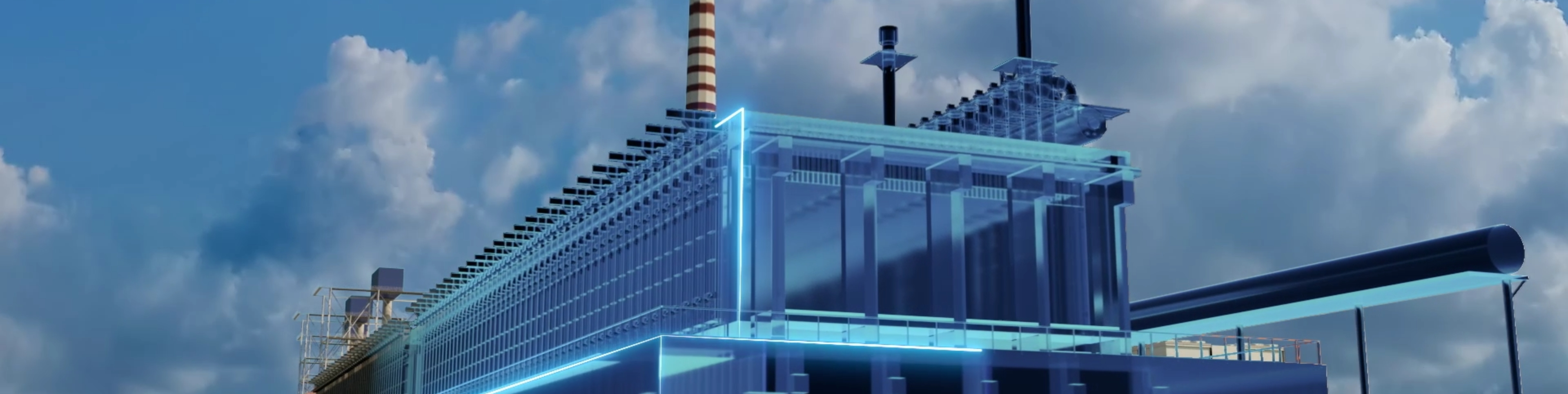
Indirect-heating vertical retorts include vertical retort for lump coal, vertical retorts for fine coal, and built-in steel plate structure vertical retort.
Vertical Retorts for Lump Coal
The vertical retorts for lump coal was developed by ACRE in the 1980s -1990s, primarily for city gas production. It was one of the main retort types for town gas at that time, serving more than ten large and medium-sized cities including Dalian and Taiyuan (additional 20 other cities relying on town-gas from 4.3m top-charging coke ovens). These retorts were phased out as a result of natural gas replacement, with an average stable operation of about 20 years.The national standard GB 51208-2016 "Code of design on plant of producing man-made town gas" developed by ACRE based on this technology, remains valid.
In recent years, to meet the high-end requirements of the low-rank coal carbonization market for environment-friendliness, safety, efficiency, low energy consumption, low emissions, and intelligent operation, ACRE has upgraded the early indirect heating type vertical retorts used for lump coal gasification. The overall technological and equipment has been significantly improved, aligning with national standards and capable of providing high-quality low-rank coal carbonization solutions.
This retort type employs indirect heating carbonization, i.e. gas burns in a separate combustion chamber, with heat indirectly transferred to the coal in the coking chamber through refractory brick walls, allowing carbonization to occur in an oxygen-free environment. A top-to-bottom temperature gradient forms in the coking chamber, and as the coal slowly ascends, it gradually heats up, undergoing thorough thermal decomposition at different temperature stages, maximizing the release of volatiles. The main products are upgraded coal, coal tar, and high-calorific clean gas. Since waste gas does not enter the crude gas system, the produced gas is of pure composition and high calorific value (3,500-4,000 kcal/m³), making it a high-quality chemical feedstock. Additionally, indirect heating prevents semi-coke and tar from burning loss by direct flame contact, thereby improving product yield and quality.
This technology significantly increases gas production by introducing steam at the retort bottom to react with high-temperature semi-coke to produce water gas. The entire process features outstanding energy efficiency, environment-friendliness, and water saving, meeting green economy development and providing an efficient solution for semi-coke waste heat recovery.